
Self-Care Is Self-Love: How Compassion Protects Your Heart After Menopause

Sometimes love is something we uncover, not something we chase.
February is Heart Month — and Valentine’s Day
February brings us two invitations: to care for our physical hearts during Heart Health Month, and to celebrate love on Valentine's Day. But what if those two aren't separate at all?
What if the kindest thing you could do for your cardiovascular health is learning to treat yourself with the same compassion you'd show someone you deeply love?
For years, I didn't see the connection. Self-love felt foreign to me—even a little silly. But a shift happened in midlife that changed everything about how I understand heart health now. And if you're a woman navigating menopause or beyond, I think this matters for you too.
The Conversation That Unsettled Me
Six years ago, my husband and I were driving to a Valentine's weekend getaway. We put on a podcast about self-love—one of those feel-good topics that sounds lovely in theory.
About halfway through, I turned to him and said something I'd never admitted out loud:
"I don't think I've ever been able to say that I love myself."
It felt true. And uncomfortable. Self-love seemed like nonsense to me—hippy-dippy, self-absorbed, even vain. Besides, I had a loud, critical voice in my head that had been with me for decades. The idea of silencing it felt impossible.
So I did what any rational person would do: I brushed the whole thing aside and didn't think about it again.
Until a bike ride the following October.
The Revelation I Didn't See Coming
It was one of those perfect fall days—blue sky, crisp air, the kind of afternoon that makes you grateful just to be outside. I was riding alone, no agenda, just moving.
And then, out of nowhere, this thought stopped me cold:
"If I don't love myself, then why do I spend so much time taking care of myself?"
I sat with that question for a long time.
Why did I care so much about eating clean, whole foods? Why did I make time to exercise, meditate, stretch, and get outside in nature?
If I truly didn't love myself, wouldn't I just… not bother?
That's when it hit me:
Self-care is self-love.
Every choice I was making to support my health—every walk, every nourishing meal, every early bedtime—those weren't chores or obligations. They were acts of love. Quiet, daily proof that I valued myself enough to care for my own wellbeing.
I just hadn't named it that way yet.

Sometimes clarity arrives quietly—while you’re moving, breathing, and simply paying attention.
What This Has to Do With Your Heart
Here's where this gets interesting—and deeply relevant to your cardiovascular health.
Emotional wellbeing—feeling purposeful, connected, and kind toward yourself—actually protects your heart.
Self-love isn't just a nice idea. It's a form of cardiovascular care.
When you treat yourself with compassion, you're more likely to:
Make nourishing food choices instead of reaching for comfort in processed foods
Move your body in ways that feel good rather than punishing
Prioritize rest instead of pushing through exhaustion
Seek connection instead of isolating when things feel hard
Set boundaries that protect your energy and peace
All of these behaviors support heart health. But they don't come from willpower or discipline—they come from a deep sense that you are worth caring for.
Pillar #4: Empower — Resilience Through Self-Compassion
Midlife brings so much change. Your body shifts. Your roles evolve. Sometimes your sense of identity feels uncertain.
It's easy to be hard on yourself during this transition—to criticize the weight that won't budge, the energy that fluctuates, the way your body doesn't respond the way it used to.
But what if, instead, you met this season with curiosity and kindness?
Resilience isn't about being tough on yourself. It's about being for yourself.
It's noticing when your inner voice gets harsh and choosing to soften it. It's recognizing that your body isn't betraying you—it's recalibrating for a new chapter. It's giving yourself permission to rest, to start over, to try again without shame.
When you cultivate self-compassion, you build emotional resilience. And that resilience becomes the foundation for every other healthy choice you make.

Sometimes clarity comes when we give ourselves space to listen.
Try This:
The next time you catch yourself in negative self-talk, pause. Take a breath. Then ask:
"Would I speak this way to someone I love?"
If the answer is no, try rephrasing it with the same gentleness you'd offer a dear friend.
Pillar #5: Connect — Relationships as Heart Medicine
Self-love doesn't mean going it alone. In fact, one of the most powerful ways to support your heart—both emotionally and physically—is through meaningful connection.
Strong relationships reduce stress, lower blood pressure, and even improve immune function. On the flip side, research shows that chronic loneliness poses health risks comparable to smoking up to 15 cigarettes a day. Connection isn't just good for your soul; it's vital for your cardiovascular health.
But here's what I've learned: the quality of your relationships with others reflects the quality of your relationship with yourself.
When you treat yourself with respect and compassion, you're more likely to:
Seek out relationships that nourish rather than deplete you
Set boundaries that protect your wellbeing
Show up authentically instead of performing or people-pleasing
Give and receive care in balanced, healthy ways
Connection isn't just about being around people—it's about being with people who see you, support you, and remind you of your worth.
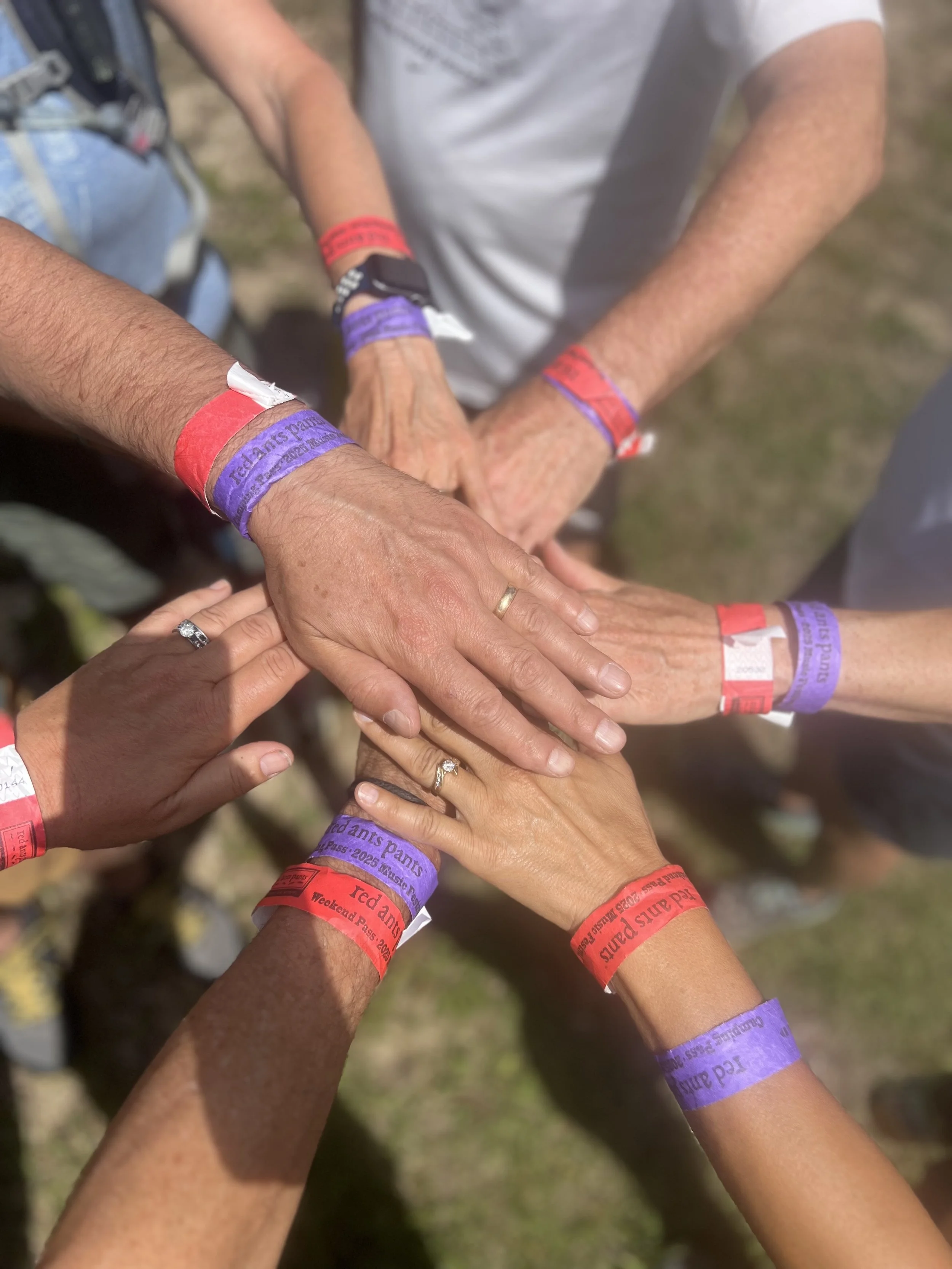
Connection is one of the most powerful forms of heart medicine.
Who's in Your Circle?
Take a moment to think about the people in your life right now.
Who energizes you?
Who leaves you feeling drained?
Where do you feel most seen and valued?
Are there relationships you've been meaning to nurture but keep putting off?
Connection takes intention. But it's one of the most potent forms of medicine available to you—and it doesn't require a prescription.
Heart Health Is About More Than Cholesterol Numbers
In my February 1st post on menopausal heart health, we talked about the physical changes that happen to your heart after menopause—and the importance of knowing your numbers. Blood pressure, cholesterol, glucose, waist circumference—these clinical markers give you valuable information about your cardiovascular risk.
We also explored the first three pillars of heart-healthy living: Nourish, Move, and Renew—the lifestyle foundations that support a strong, resilient heart through real food, intentional movement, and restorative sleep.
But heart health isn't just clinical. It's also deeply personal and emotional.
The numbers tell part of the story. But they don't tell the whole story.
Because your heart also needs kindness, connection, and meaning.
It needs you to believe you're worth caring for.
That's where Pillars #4 and #5 come in—Empower and Connect—and that's what we're exploring today.
Your emotional wellbeing doesn't just make life feel better. It directly impacts your physical heart health. Research shows that chronic stress, loneliness, and lack of self-compassion all contribute to inflammation, elevated cortisol, and increased risk of cardiovascular disease.
Conversely, when you cultivate self-compassion, purpose, and meaningful relationships, you're not just improving your mood—you're actively protecting your heart.
So if you've been focusing on the "doing" part of heart health—the food, the exercise, the sleep—this post is an invitation to tend to the "being" part.
How you relate to yourself. How you connect with others. Whether you believe, deep down, that you're worthy of the care you're giving yourself.
Because all of it matters. And all of it works together.
What Would It Look Like to Send Yourself a Valentine?
So let's bring this back to where we started: the idea of sending yourself a valentine.
What if you gave yourself the same care, attention, and tenderness you'd give to someone you deeply love?
Not someday. Not when you lose the weight or fix the thing or get it all together.
Today. Right now. Exactly as you are.
Because here's the truth: You are already worthy of love and care—not because of what you do or how you look, but simply because you exist.
And when you start treating yourself that way, everything shifts.
Your energy changes. Your choices align. Your heart—emotional and physical—begins to heal and strengthen.
Reflect & Explore
I'd like to leave you with a few questions. Not to pressure you or make you feel like you need to have all the answers—but to gently invite you inward.
Grab a journal, a cup of tea, and give yourself a few quiet minutes to sit with these:
On Self-Compassion:
When was the last time I spoke kindly to myself? What did that feel like?
What would change if I believed I was worthy of my own care and attention?
What's one way I already care for myself that I haven't acknowledged as an act of love?
On Purpose & Resilience:
What matters most to me in this season of my life?
What gives me energy? What drains it?
If I could release one expectation I'm holding about myself, what would it be?
On Connection:
Who makes me feel seen, valued, and supported?
Is there a relationship I've been meaning to nurture? What's one small step I could take this week?
How can I show up more authentically in the connections that matter most?
Take your time with these. There's no rush. The answers will unfold as you give them space.
You Don't Have to Do This Alone
If you're reading this and thinking, "I want this—but I'm not sure how to get there," I want you to know: you don't have to figure it all out on your own.
That's what coaching is for.
My approach is rooted in curiosity, compassion, and real conversation. We don't focus on perfection or rigid rules. Instead, we explore what matters to you—your energy, your values, your vision for this next chapter—and build sustainable habits that support your whole self.
If you're curious whether my style of coaching might be a good fit for you, I invite you to schedule a free Discovery Call.
We'll talk about where you are, where you'd like to be, and how we might work together to help you feel more energized, confident, and supported in your own body and life.
Schedule Your Free Discovery Call →
No pressure. No sales pitch. Just a genuine conversation about your wellbeing.
You can also download my Vitality Blueprint for free—it's a guide to the five pillars of post-menopausal wellness, with reflection prompts and action steps for each one.
Download the Vitality Blueprint →
Above All Else, Guard Your Heart
There's a verse that has taken on new meaning for me in recent years:
"Above all else, guard your heart, for everything you do flows from it." — Proverbs 4:23

Caring for your heart allows you to show up in your life in the ways that matter most to you.
For a long time, I thought this was about protecting your heart from being hurt by others—guarding it emotionally, building walls, being careful who you let in.
But now I see it differently.
Guarding your heart means caring for it—physically and emotionally—so it can sustain everything you want to do and be.
Because the truth is, everything does flow from your heart. Your energy. Your capacity to love and connect. Your ability to show up for the people and purposes that matter most.
If your heart isn't healthy—if it's stressed, inflamed, or broken—nothing else works the way it should.
So guarding your heart isn't about fear or protection from others. It's about stewardship. It's about honoring the very center of your life with the care it deserves.
So this Valentine's Day, I hope you'll do something radical:
Send yourself a valentine.
Not a card. Not flowers. But a commitment.
A commitment to speak kindly to yourself.
To rest when you need it.
To nourish your body with intention.
To surround yourself with people who lift you up.
To live with purpose, meaning, and compassion.
Because when you care for your heart this way, you're not just preventing disease.
You're choosing vitality.
And that, my friend, is the greatest love story of all.
Live with vitality & live well longer
Want to explore what vitality-focused coaching could look like for you? Let's talk. Book your free Discovery Call here.